Incentive travel to Egypt works because three very different worlds sit within an hour of each other: the Red Sea, the Sinai desert and five thousand years of history. A company that rewards its best people here is not buying them a hotel; it is buying access. A reef from the deck of a private yacht. The Giza plateau with no other visitors on it. A temple that cruise ships cannot reach. This guide is about Egypt specifically: when to travel, how to build a day-by-day itinerary in Sharm El Sheikh, Cairo or on the Nile, what turns a route into a program, and what we need from you to send one back.
If you are still deciding whether an incentive trip is the right tool at all, we have covered formats and impact in a separate piece. Here we assume the decision is made and the only questions are where and how.
Why Egypt works for corporate incentive travel
An incentive trip lives on impressions, not transfers, and Egypt keeps its impressions close together. An hour from a Red Sea resort you are in the mountains of Sinai; from a Cairo hotel the pyramids are a drive across town. The group arrives without losing a day to recovery and spends its time in the water, in the desert or in front of a temple wall rather than on a coach.
- Sea: house reefs straight off the shore in Sharm El Sheikh, private yacht charters, snorkelling and a first supervised dive for people who have never been under water.
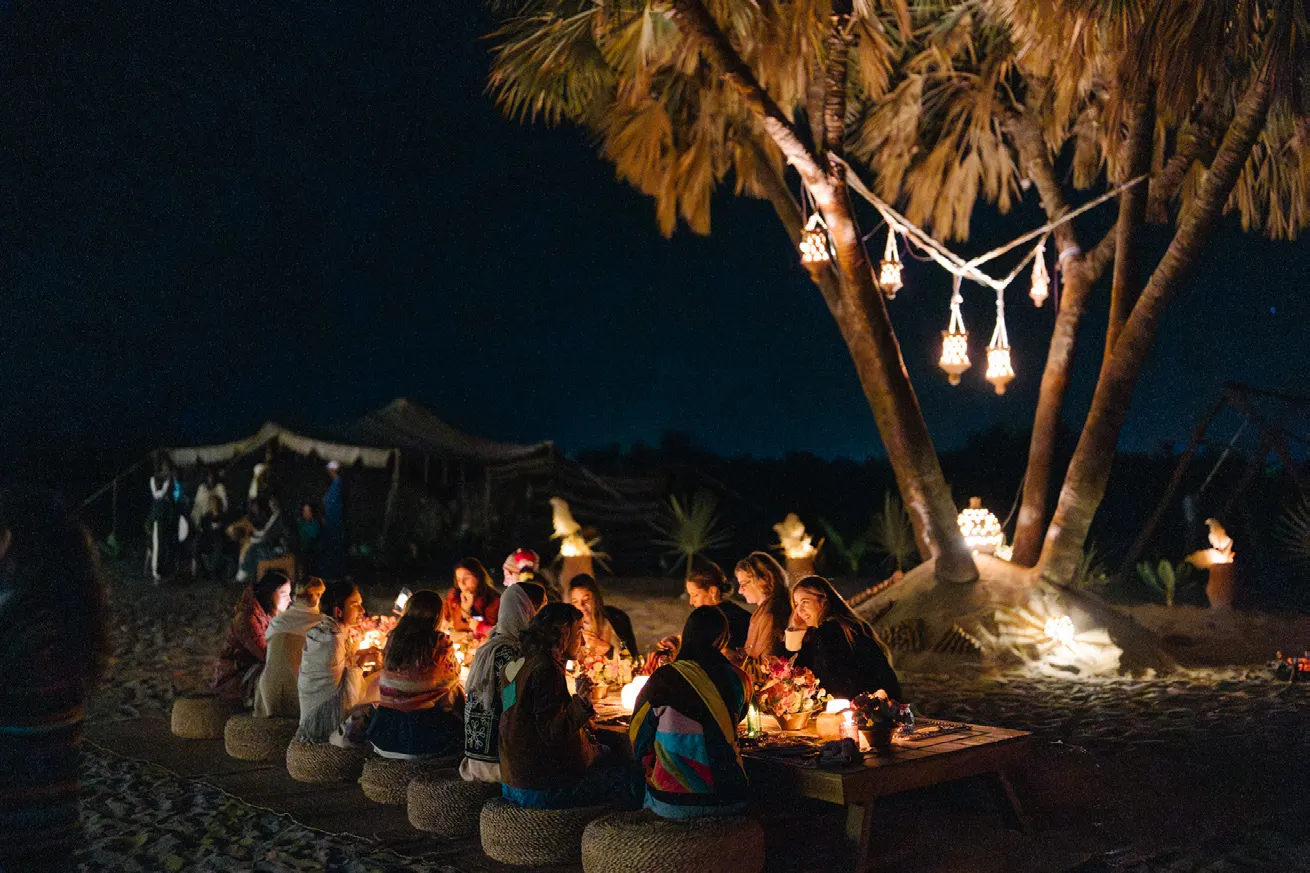
- Desert: the Sinai mountains an hour from the hotels, tea with Bedouin hosts, a camp that lights up in the dark and a sky worth switching the headlights off for.
- History: the Giza plateau, the Grand Egyptian Museum, Al-Muizz Street in historic Cairo, the temples of Luxor and Aswan, all with Egyptologist guides working in English and Russian.
- Infrastructure: resorts where the whole group stays under one roof, with the conference hall, the beach and the gala venue a few minutes apart.
Season: October to May, and the summer rule
The main season for an incentive trip to Egypt runs from October to May: comfortable temperatures for outdoor programs, clear skies for a desert evening, warm sea. The Nour El Nil dahabiyas sail from September to May, which is a useful anchor for the river part of a trip. Summer is not off the table, but it has its own rules.
Three itinerary templates, day by day
These are the three skeletons we usually open a conversation with. They combine well: Sharm El Sheikh plus Cairo is the most common pairing, Cairo plus the Nile the richest. Days are listed without prices and without a minute-by-minute schedule. This is a map, not a quote.
Sharm El Sheikh: sea and desert
For groups that want one hotel for the whole trip and as much time outdoors as possible. Everything except the flight happens within an hour of the room.
| Day | What happens |
|---|---|
| Day 1 | Arrival, VIP meet and greet with airport fast-track, transfer with our own drivers, check-in. A welcome dinner on the beach in the evening, with no stage and no speeches. |
| Day 2 | A free morning on the beach. In the afternoon, The Archaeologist's Last Entry: two and a half hours in the Sharm El Sheikh museum on an evening slot, between the sea and dinner. |
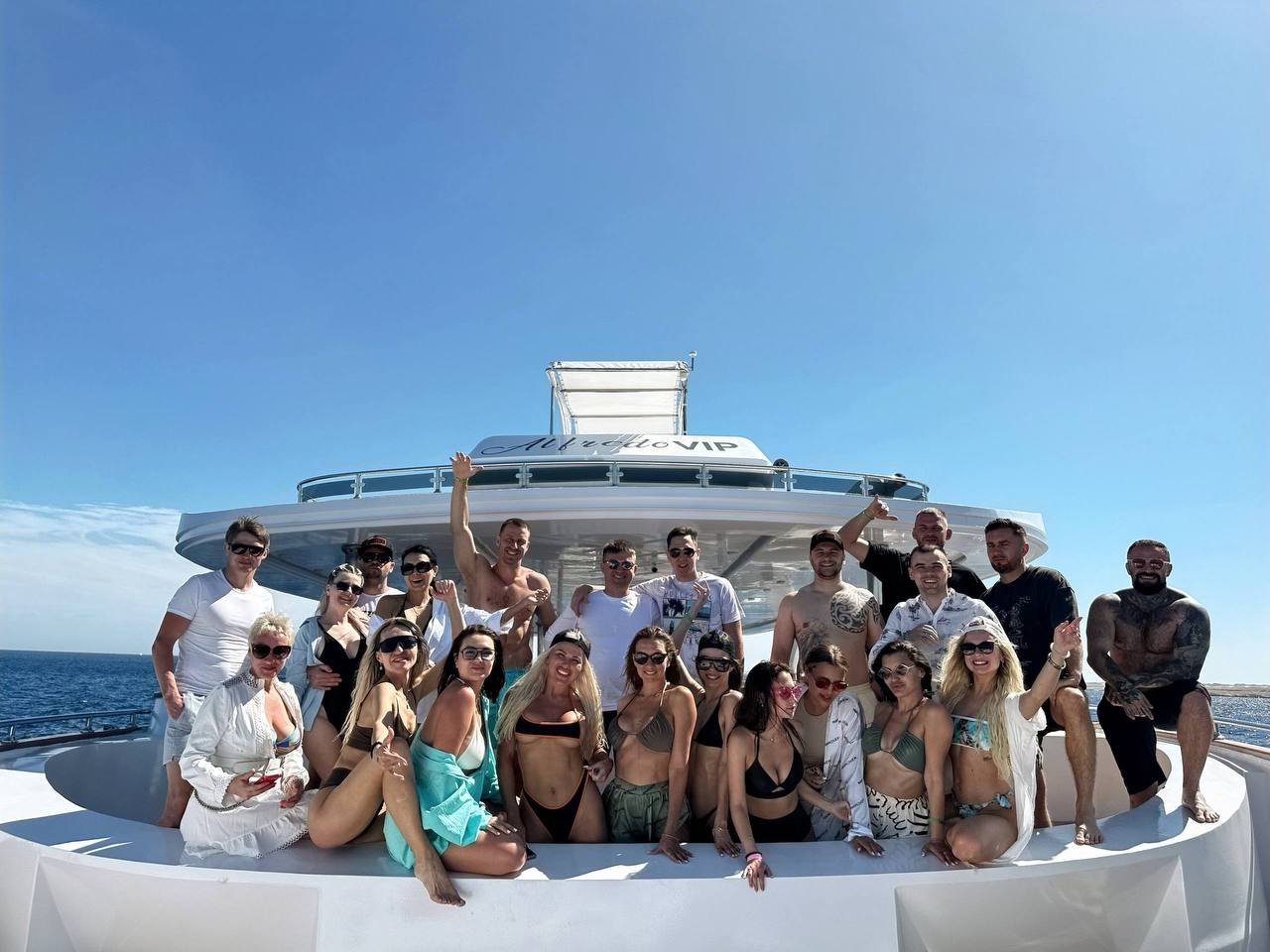
| Day 3 | The Barque Follows the Sun: eight hours on a privately chartered four-deck yacht. Half the group goes to the reef for snorkelling or a first dive, the other half runs the headquarters on board. The yacht turns for home straight into the sunset. |
| Day 4 | A day with nothing scheduled: spa, sea, diving for certified divers. Gala dinner and awards in the evening. |
| Day 5 | The Way to the Stars: departure for the Sinai mountains timed to the sunset, tea with Bedouin hosts, a camp in the dark, dinner under the sky and a star of their own in the telescope for every guest. |
| Day 6 | Late breakfast, departure, fast-track at the airport. |
Cairo: history and private access
For people who have already seen the pyramids through a bus window and want a day with them where they have to think. The core of this route is the Giza plateau before it opens or after it closes to the public: only your group, all three chambers of the Great Pyramid and access inside the Sphinx enclosure.
| Day | What happens |
|---|---|
| Day 1 | Arrival in Cairo, VIP meet and greet, check-in. In the evening, The Last Frame: a three-course immersive dinner set at a 1959 premiere, where the room votes on how the film ends. In Cairo it can take over a whole boat on the Nile. |
| Day 2 | The Pyramid Code: four hours on the Giza plateau with an early start. Six teams, an archaeologist's diary in which half of what is written is a lie, and a chest that opens only when every team has done its part. |
| Day 3 | The Last Page: four hours in the Grand Egyptian Museum. The group becomes the editorial board of a catalogue and catches the errors by looking at the originals. Optional extension: the first boat of Khufu. |
| Day 4 | Four Hands, One Letter: Al-Muizz Street with a calligrapher, a coppersmith and a tea house. Every guest writes a single word in ink, and in a courtyard the words become a letter whose last line is about your company. |
| Day 5 | Private access to the pyramids. Morning slot: leave the hotel in the dark, the plateau with nobody else on it, the panorama at sunrise, breakfast with a view of the pyramids. Or the evening slot after the plateau closes, in sunset light. Fly out in the evening or continue to Sharm El Sheikh. |
The Nile: a cruise as the incentive
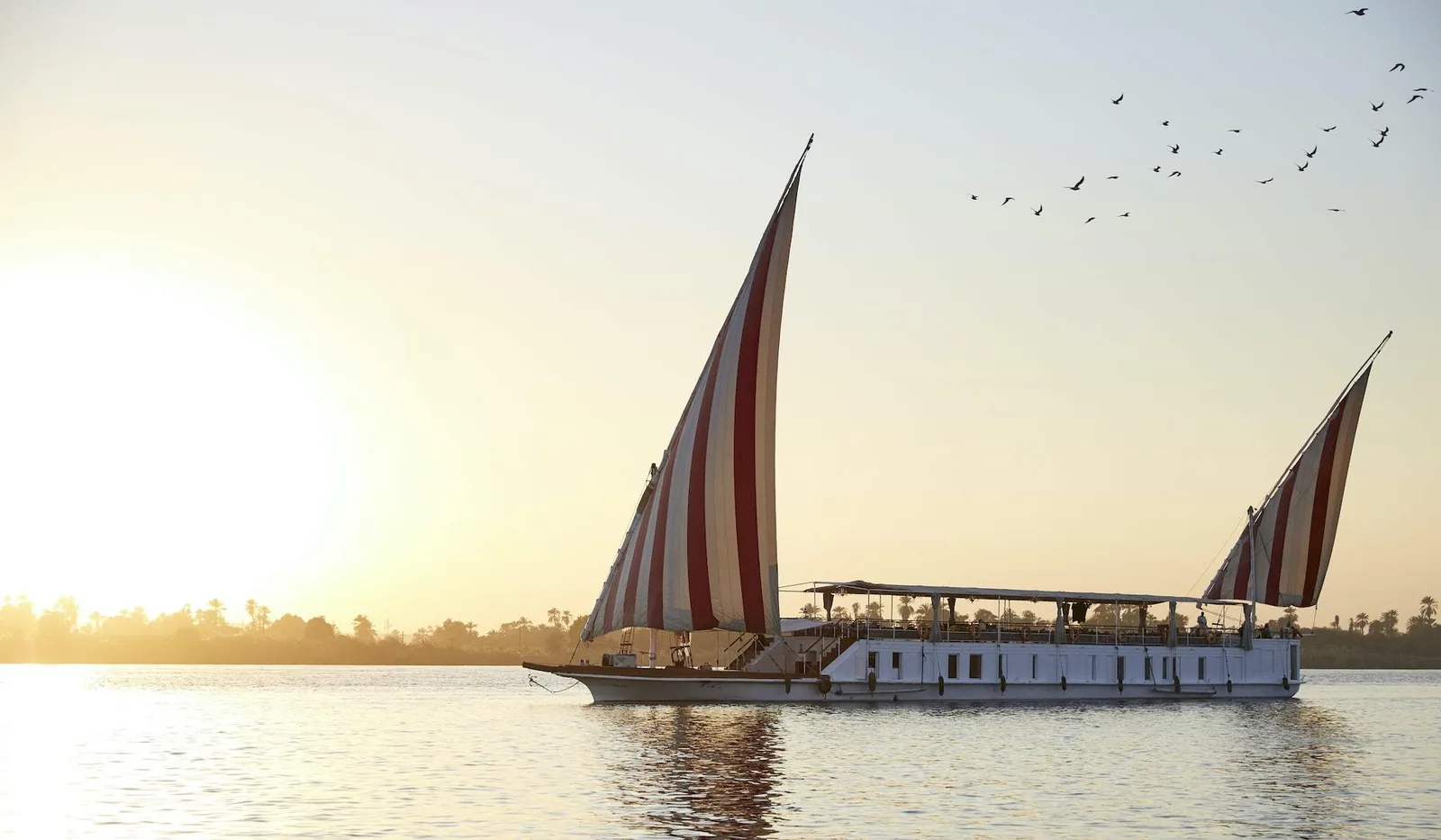
A cruise solves the central task of an incentive without effort. The group lives together for several days with no transfers and no suitcases, and the route itself delivers Karnak, the Valley of the Kings, Edfu, Kom Ombo and Philae. Three options, depending on group size and the character of the trip.
- Classic cruise, Luxor to Aswan, 3, 4 or 7 nights: Le Fayan Suites, an all-suite ship with panoramic windows in every cabin, or Soleil, the largest ship in our fleet with the largest spa on the Nile. For groups from 20 to 80 and beyond.
- Private charter on Lumière: eight cabins, up to 20 guests, five nights from Luxor to Aswan on your own schedule. Nights moored at Fawza and Herbiab islands, dinner by the fire, private evenings in temples. For boards, key partners and executive retreats.
- A dahabiya from the Nour El Nil fleet: a twin-masted sailing boat for 16 to 24 guests, six days from Esna to Aswan. Stops on empty desert banks and a night beside the lit temple at Gebel el-Silsila, where large ships cannot go. For groups that need a rhythm more than a route.
| Day | Private charter on Lumière, Luxor to Aswan |
|---|---|
| Day 1 | Arrival in Luxor, embarkation. Karnak and Luxor Temple before sunset, first dinner on board. |
| Day 2 | Valley of the Kings, the temple of Hatshepsut and the Colossi of Memnon in the morning. Departure, night moored at Fawza island. |
| Day 3 | Edfu: the temple of Horus, approached by horse-drawn carriage. Dinner by the fire on Herbiab island. |
| Day 4 | Gebel el-Silsila and Kom Ombo, the temple of Sobek on a bend in the river. Evening on the sun deck. |
| Day 5 | Aswan: Philae and the Nubian village by boat. A private evening in a temple and the awards ceremony. |
| Day 6 | Disembarkation. Abu Simbel as an option, then the flight out of Aswan. |
What turns an itinerary into a program
A template is a skeleton. It becomes a program when four elements are in place, each with its own job.
- A gala evening with the awards. The climax the trip was announced for. In Sharm El Sheikh that means a venue on the beach or on a cliff under the open sky; in Cairo, a boat on the Nile; on a cruise, the sun deck.
- A quest in a real place. One of our ten signature programs turns the plateau, the museum, the street, the yacht or the mountains into the playing field, while Egyptologist guides tell the real history. Roles within a team differ, and not every role is about talking: by the halfway point the quietest guests are usually the most involved.
- A free day. An incentive is not a conference: the minimum of mandatory, the maximum of choice. One day with nothing scheduled makes the other days stronger.
- A finale that stays. Every program ends with an object the guest takes home, and it is not a branded pen.
What guests take home
We design each finale to leave a physical trace. This is what stays after some of the programs:
- The Barque Follows the Sun: a personal seal with the guest's name in Egyptian signs, plus footage from the instructors' cameras.
- The Way to the Stars: a personal card with a star of their own, signed by the astronomer.
- The Pyramid Code: the restored route with photographs of every team, the expedition letter and a fragment of the solar seal for each guest.
- The Last Page: the layout of the assembled last catalogue page with every team's captions and your company's name in the imprint.
- Four Hands, One Letter: a card with the guest's own word written in ink under the calligrapher's hand, and a copy of the assembled letter.
- The Last Frame: the group photo with the clapperboard, printed in a film-strip frame by the time guests leave, and their names in the credits.
Group size and logistics
The signature programs are built for groups of 20 to 100 guests. Private access to the pyramids is limited to 50 guests per permit, so a larger group is split into two slots, morning and evening. On the river the ship sets the number: Lumière takes up to 20 guests, a dahabiya up to 24, Le Fayan Suites up to 74 and Soleil up to 106.
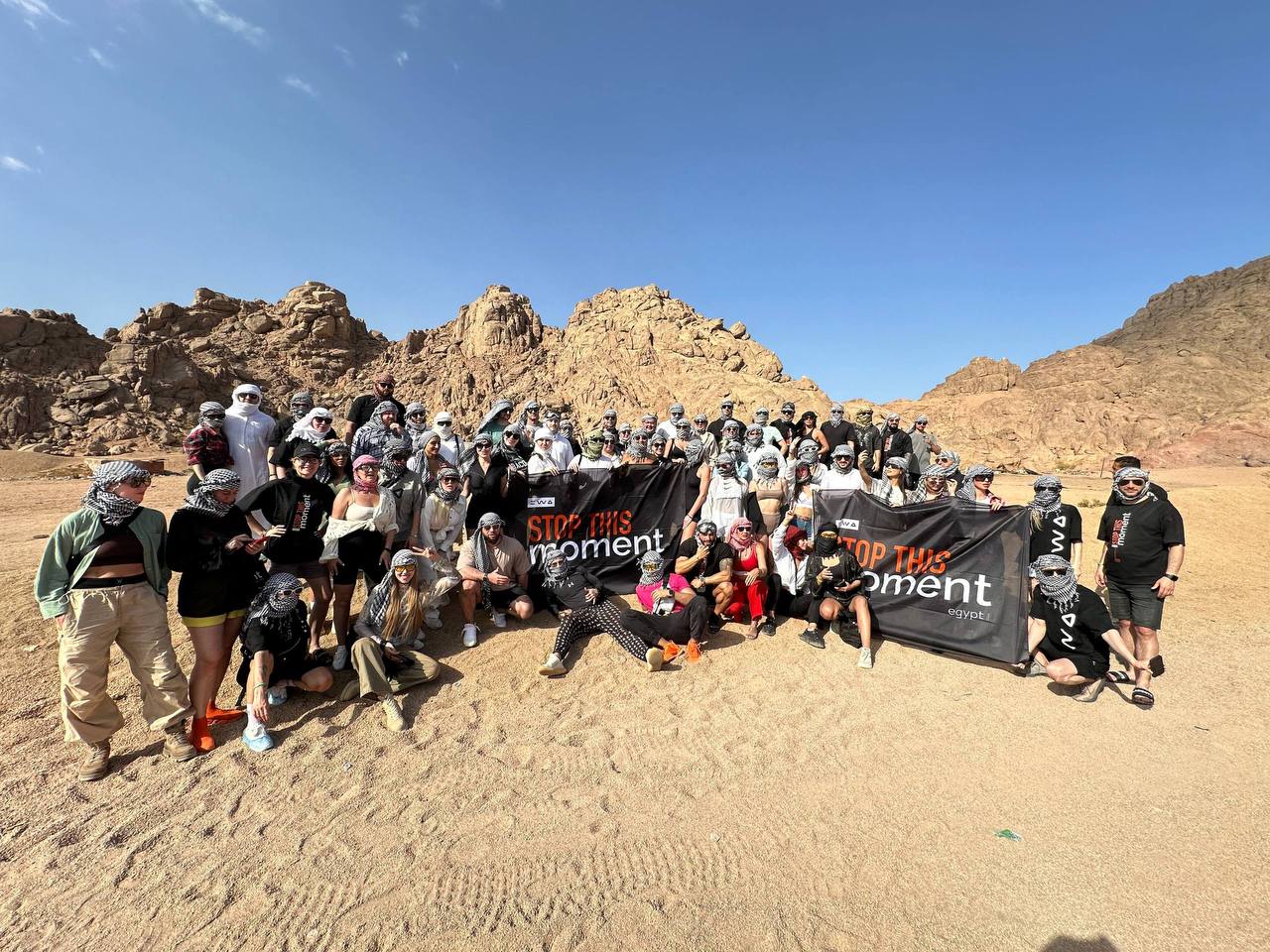
We also handle groups well above a hundred, but that becomes a hybrid of incentive and conference with the hotel as the base. That is how the seven-day NL International trip for 300 participants at Park Regency was built: business sessions in the conference halls, workshops in yoga, make-up, dance and fine art, team-building quests, a Luxury Egypt evening and a White Party on an open-air cliff. The five-day EWA product retreat at Rixos Seagate combined workshops, master classes and team building with evenings at the Marlin and Space venues. And the Carlsberg conference for 1,000 participants at Domina Coral Bay ran with full technical production from logistics through to the closing gala dinner.
What we take care of
- VIP meet and greet with fast-track at Cairo and Sharm El Sheikh airports, transfers across Egypt with our own drivers.
- Permits for the Giza plateau, the museums and historic Cairo, plus filming and event permissions in protected areas.
- Egyptologist guides in English and Russian. Programs run identically in both languages, so a mixed international group is not a problem.
- Hotels, ships and venues under direct contracts, with no subcontractor between you and the people delivering the event.
- Coordination and a 24/7 duty office for the whole trip.
A signature program needs four to six weeks of preparation: a site survey, props, and the personal details, such as your company's name, the date and a fact from its history. Treasures of Ra and Pharaoh: The Lost Expedition, the two programs we bring with full sets into your hotel ballroom, need eight to ten weeks before the first show. Cruises and private pyramid access are booked against specific dates, so the earlier the month is known, the wider the choice.
What to put in your brief
To come back with an itinerary rather than a list of questions, we need five things:
- The date or the month. It drives the seasonal logic: whether we start at dawn, whether the dahabiyas are sailing, whether the ship is free.
- The number of guests. It sets the ship, the number of permits and the format of the gala.
- The hotel, if it is already chosen, or the city: Sharm El Sheikh, Cairo or Luxor.
- The language of the group: English, Russian or both.
- The goals: who is being rewarded, for what, and which moment should be the main one. A short questionnaire on this is what we build the finale from.
La Royal Event has worked in Egypt since 2004, with its own team in Cairo and Sharm El Sheikh, direct contracts with hotels, ship owners and venues, permits and Egyptologist guides all inside one company. Send us the date and the number of guests, and we will come back with a day-by-day itinerary.
Liked this article?
Share with colleagues — useful for them, nice for us :)
Stay on top of the industry
Weekly — new articles on MICE industry, cases and insights. No spam.