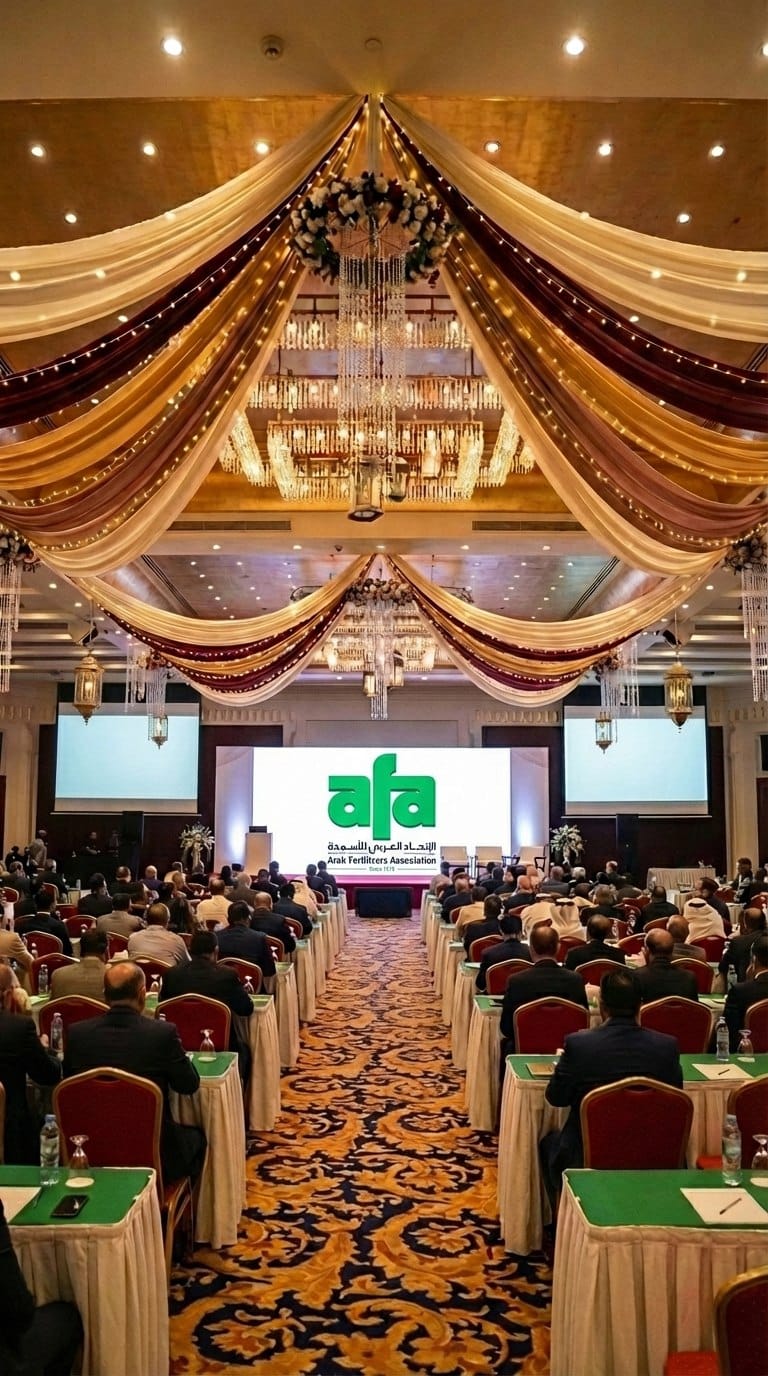
A corporate event abroad differs from a home project in one fundamental way: you cannot simply drive over and take a look. The venue, the contractors, the permits, the drivers and the kitchen are all in another country, another time zone and, more often than not, another language. So the central question of organizing an event overseas is not what to do but who owns each piece, and how to structure the work with a local DMC so that every task has a name attached to it.
We have already published a month-by-month preparation checklist. This article is about the operating model instead: how responsibility is split between the client, the agency and the destination management company, which documents and permits you will need abroad, why a site inspection is non-negotiable, how contracts and payment stages are structured, and what actually happens on the ground on event day. The examples come from Egypt, from Cairo and Sharm El Sheikh, where we act as the receiving party.
A corporate event abroad has three parties and one point of accountability
Destination event planning involves three parties. The client sets the goals, approves the budget and owns the content: the program, the speakers, the guest list. The agency turns those goals into a project: concept, script, production, coordination. The DMC, the destination management company, is the receiving party in the host country. It holds the contracts with hotels and venues, the licenses needed to obtain permits, and its own drivers, guides and contractors.
| Area | Client | Agency | DMC (receiving party) |
|---|---|---|---|
| Goals and program | Sets the brief, approves content and speakers | Writes the script and timing, directs the show | Adapts the script to the venue and local rules |
| Participants | Collects the list, passport data and questionnaires | Manages the roster and guest communication | Visa support, rooming, airport meet-and-greet |
| Venue and hotel | Approves the choice | Builds the shortlist and requirements | Books on direct contracts, manages the hotel before and during the event |
| Documents and permits | Provides data and authorizations | Assembles the package, tracks deadlines | Obtains permits for venues, filming and protected sites |
| Technical and decor | Approves the rider and visuals | Writes the technical rider | Sources local contractors, builds, runs the rehearsal |
| Logistics | Provides flight schedules | Designs the movement plan | Transfers with in-house drivers, fast-track, escort |
| On site | Makes program decisions | Project lead on the floor | Duty office 24/7, coordinators, contractor liaison |
The agency and the DMC can be the same company; that is how we work in Egypt, with our own team in Cairo and Sharm El Sheikh, direct contracts with hotels, ship owners and venues, and no subcontracting of the event itself. But even when the two are separate, the client needs a single point of accountability: one person who owns the whole project and deals with the hotel, the contractors and the permits personally. The moment the client has to call the hotel directly, the model is already broken.
Documents and permits you will need abroad
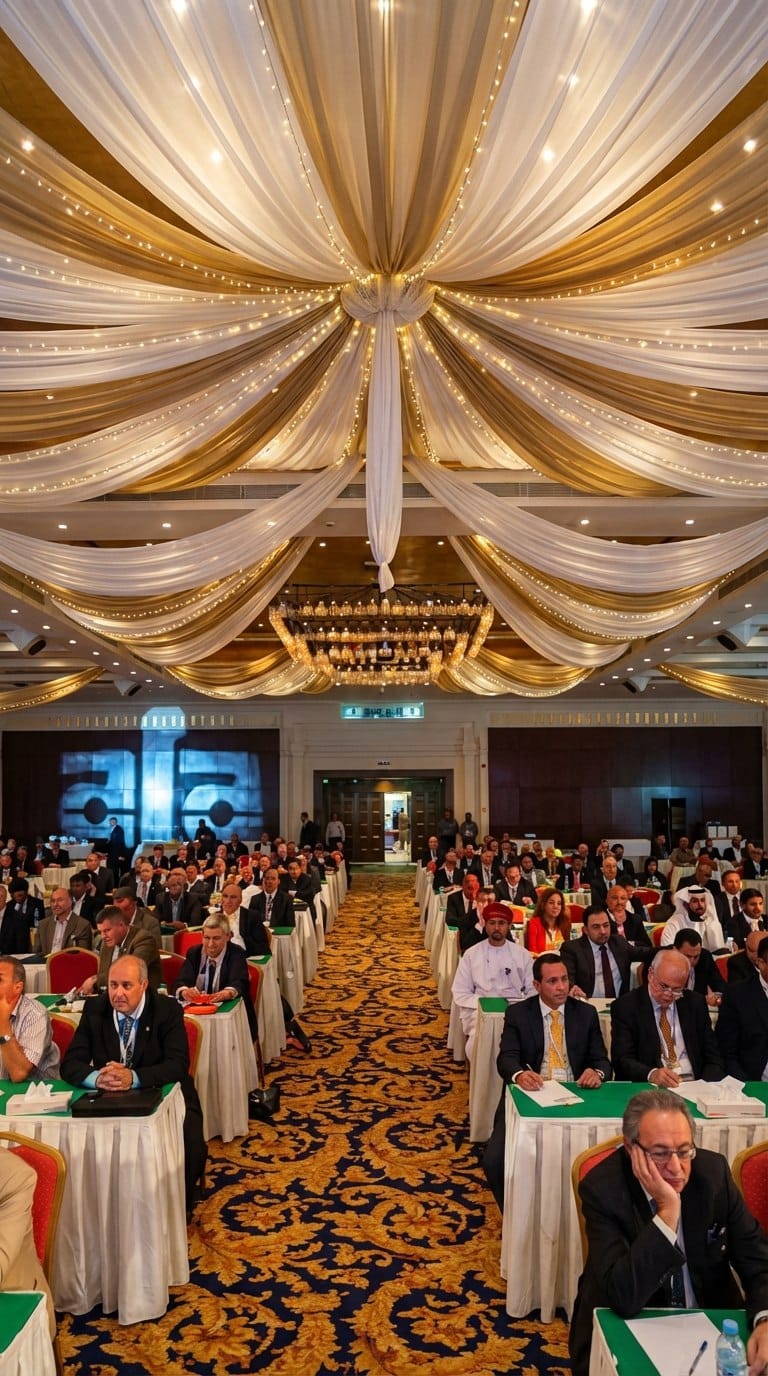
The paperwork of an international event runs in two streams: documents for the participants and documents for the event itself. Clients know the first stream from their home projects; the second is where overseas surprises live.
Visas and insurance for participants
Entry rules depend on the passport of each participant and on the region: for Sharm El Sheikh and Cairo they differ, and the first thing a DMC does is check the group list against the current regulations. The client collects passport data and questionnaires, the agency keeps the roster, the receiving party prepares visa support and accommodation confirmations where required. Medical insurance must be valid in the host country and cover the actual program: a yacht day, a desert evening or a dive are not a stay at the hotel.
Permits for venues, filming and protected sites
In Egypt, an event or a shoot on the Giza Plateau, in a museum or in historic Cairo happens only with a permit. It is issued for a specific date, location, headcount and format, and only a licensed local company can apply for it. Three things matter to the client here: the permit is requested in advance and on the basis of the script; changing the format after the permit is issued means a new approval; and filming is a separate permit that is not part of renting the venue.
- Participant list with passport data, for visas, rooming and site access
- Event script and timing, which is the basis for permits in protected zones
- Inventory of equipment and decor being imported or installed at the venue
- Photo and video brief: locations, equipment, drone use
- Company details and authorizations for contracts with the hotel and venues
- Dietary and medical questionnaires, for catering and insurance
Site inspection: why you go and what you check
Hotel photos and floor plans show what a venue looks like. An inspection shows how it works. The DMC walks it together with the project lead from the client or the agency, and the output is not an impression but a document: hall drawings with real dimensions, a list of constraints and a decision on every disputed point.
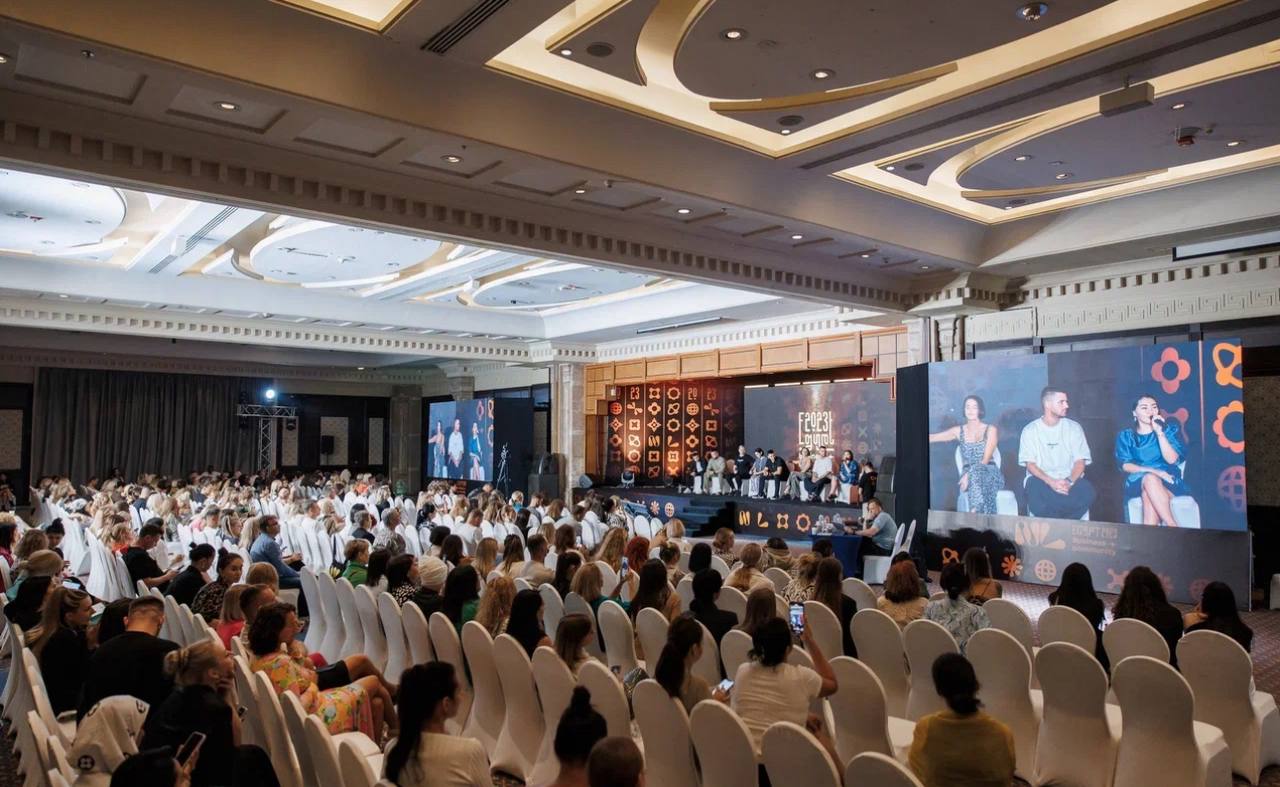
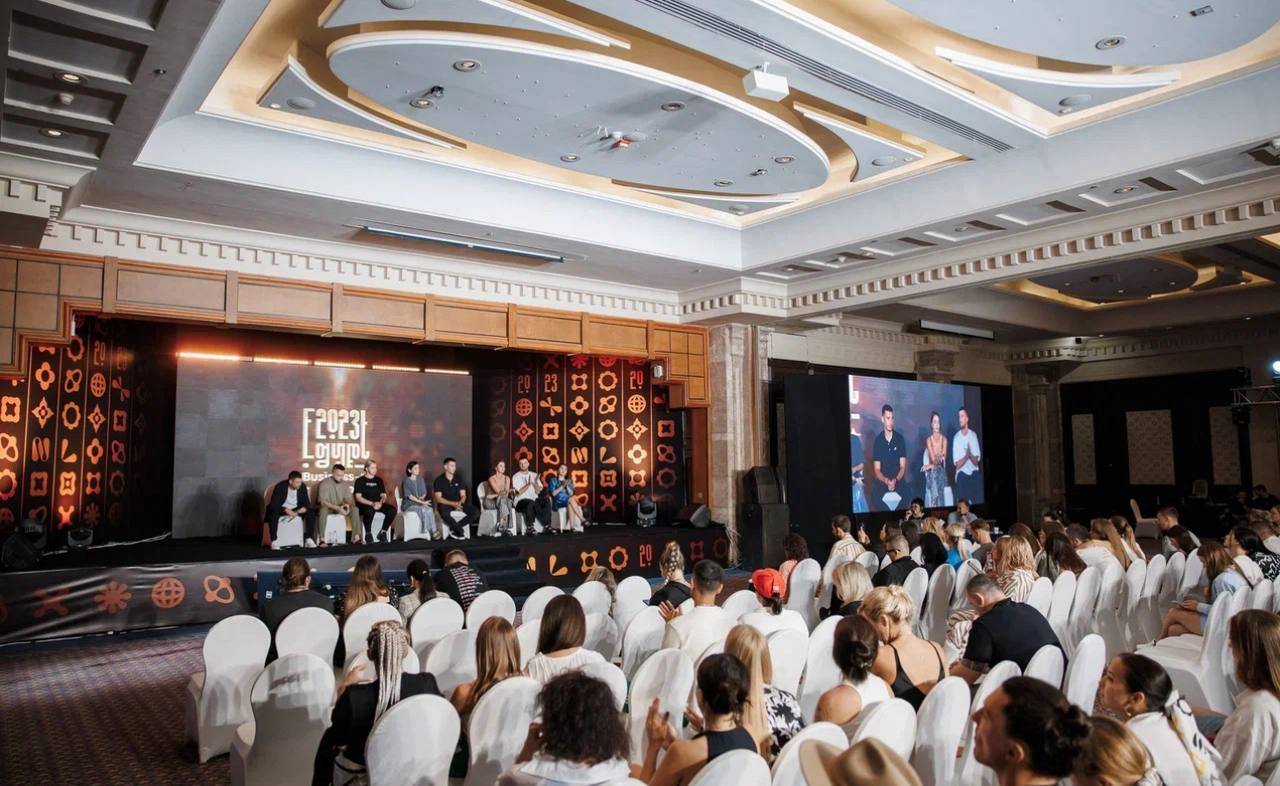
At the Carlsberg conference for 1,000 participants at Domina Coral Bay, the inspection was never only about the main hall. A thousand guests are flows: registration, coffee breaks, gala dinner seating, bus movements, hostess positions. Each flow is checked on foot: where the queue forms, how long the walk takes, where the equipment comes in.
- Halls: real dimensions, ceiling height, columns, rigging points for light and screens, floor load
- Power: capacity, location of feeds, separate lines for the stage and the catering kitchen
- Load-in: service entrance, door and lift sizes, the hour the hotel allows the build to start
- Internet: a dedicated line for streaming and registration, not the guest Wi-Fi
- Guest flows: room to hall, registration, coffee breaks, emergency exits
- Open-air areas: wind, sun, lighting after sunset, the hotel noise curfew
- Kitchen and catering: tasting, dietary options, service time for large groups
- Backup rooms: where the program moves in case of rain, wind or works in the hall
The technical rider and local contractors
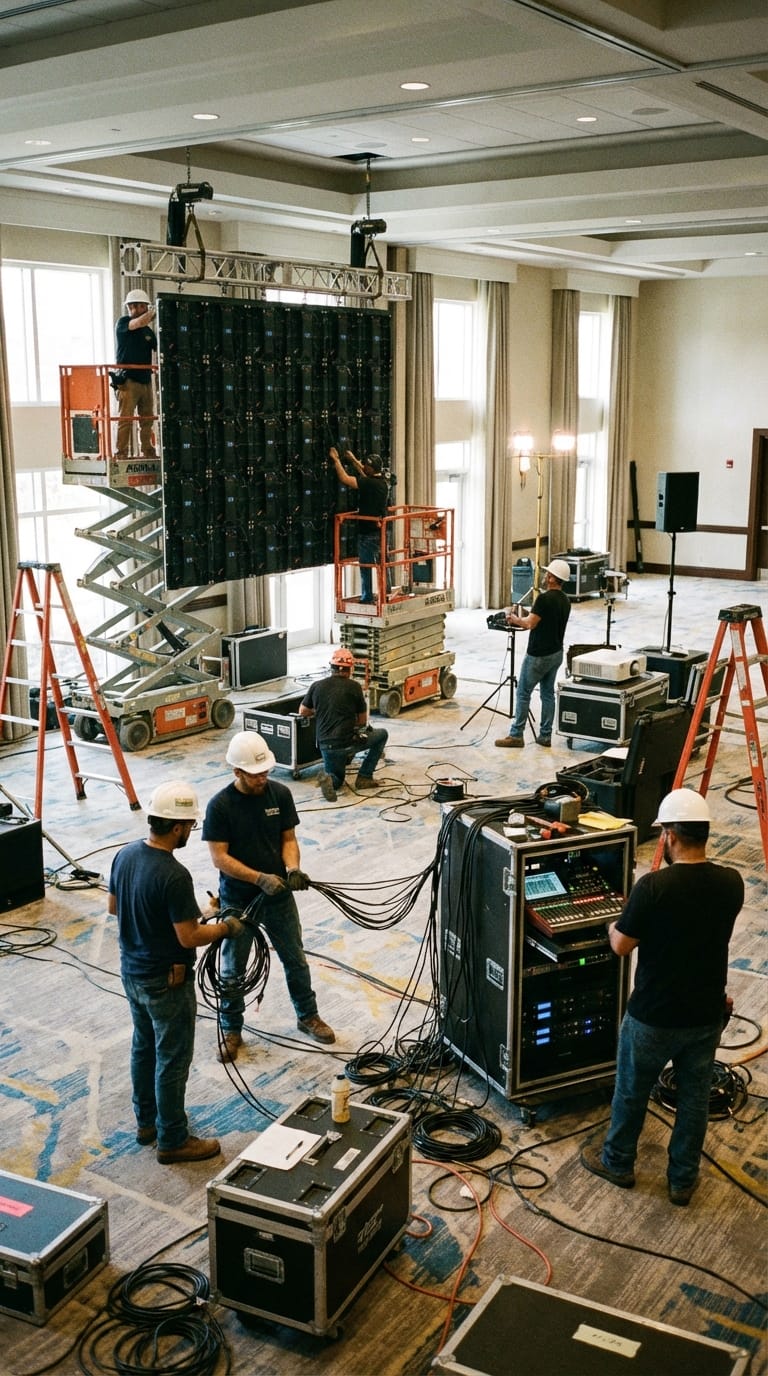
The technical rider translates the idea into requirements: stage, screens, sound, light, simultaneous interpretation, streaming, power. The agency writes it; the DMC answers the key question of how each line is delivered on site. What the hotel provides, what a local contractor brings, what has to travel with the group, and which import permits that requires.
Local contractors are the DMC's responsibility, and the contract should say so. The client does not need the name of the rigger, but does need to know that the company answering for everything else also answers for the sound. The rider is agreed in writing, with drawings and an equipment list, not over the phone. In Egypt, instructions for the build crews are prepared in Arabic.
- Stage and hall drawing with dimensions and rigging points
- Equipment list by line item, stating who supplies each one
- Power: capacity, phases, connectors and adapters
- Build, rehearsal and strike schedule agreed with the hotel
- Backup for critical items: microphones, media server, speaker laptop
- A named technician for the whole event, not just for the setup
Contracts and payment stages
Working with a DMC means three layers of contracts: client to agency, agency to DMC, DMC to hotels, venues and suppliers. The convenient model for the client is one contract with one provider, with the provider holding the entire chain below. When the agency and the DMC are the same company, that is exactly what happens.
Payments follow milestones rather than the calendar: a deposit secures the dates and the room block, the following payments are tied to confirmations from the hotel and the suppliers, and the final settlement follows the post-event reconciliation. The shares and timing depend on the project, but the principle is constant: every payment locks something in, and the client sees proof of it before the transfer.
| What the contract must include | Why |
|---|---|
| Itemized list of services | So that full service has boundaries and nothing extra appears on the final invoice |
| Roster and change deadline | Hotels and airlines run on their own deadlines; after the cutoff every name is a separate approval |
| Cancellation and attrition terms | Hotel and venue terms in the host country differ from what you are used to |
| Force majeure and plan B | Who decides on a change of plan, how, and what counts as grounds |
| Language of the contract and documents | English plus Arabic for venues; which version prevails |
| Named project lead | Name, phone, hours of availability: the single point of accountability |
Plan B: weather, logistics, people
An event abroad lives in a real environment. In Sharm El Sheikh the wind picks up in the evening, in Cairo the summer heat starts early in the morning, a flight can be delayed and a keynote speaker can fall ill. Plan B is not a promise to figure something out, but reserves that are agreed and paid for in advance, with a decision threshold and a person who makes the call.
- Open-air formats: an indoor backup room in the same hotel and a cutoff time for the decision to move
- Outdoor programs in Cairo and on the Giza Plateau: early start in summer, shade and water at every stop, a shortened route in reserve
- Transfers: backup vehicles on the route, in-house drivers, VIP meet-and-greet and fast-track at the airport in case of flight delays
- People: an understudy for every critical role, from the host to the sound engineer to the floor manager
- Equipment: a backup set of microphones, media server and power on site, not in the supplier warehouse
- Medical: the nearest clinic, the insurer hotline, a person who accompanies the guest
Communication: one point of accountability and a 24/7 duty office
Most failures abroad come not from a lack of resources but from a gap in communication: the client agreed something with the hotel, the hotel did not tell the contractor, the contractor arrived at the wrong hour. The working model is simple. One project lead on the client side, one on the provider side, a shared working chat and a single run sheet that is updated in one place only.
How the communication is set up
IT FALLS THROUGH
- The client writes to the hotel, the agency and the contractors in parallel
- The timing exists in five versions across different threads
- Nobody on site knows who makes the decision
- Contractor instructions are passed on verbally and in English
- Nobody answers at night or on weekends
IT HOLDS
- A single point of accountability on the provider side
- One bilingual run sheet with one owner
- An escalation path: who decides and how fast
- Written instructions to contractors in Arabic, with drawings
- A duty office working 24/7 for the whole event
On-site control: event day
The DMC team is on site before the guests: build, hall acceptance against a checklist, full rehearsal with sound, light, streaming and interpretation. On event day every flow has its own coordinator, from registration and the hall to catering, transfers and the evening program, and all of them report to one floor manager. The client sees one person and receives status updates, not problems.
Deviations are inevitable; what matters is how they are handled. A bus is late: a coordinator meets the guests and the program shifts according to a scenario agreed in advance. A microphone fails: the backup is already on stage. None of these decisions requires a call to the client, who learns about them from the report rather than in the middle of a crisis.
The post-event review
The project ends not when the guests leave but when it is closed: hotel and supplier invoices reconciled against the contract, closing documents in English and Arabic, photo and video handed over with usage rights, participant feedback collected. And a short review with the DMC: what worked, what had to change on the fly, and what to build into the next project.
- Line-by-line reconciliation of the final invoice against the contract and the roster
- A closing document package in the required languages
- Photo, video and shoot materials with rights and permits
- An event report: deviations from the script and the decisions taken
- Recommendations for the next trip: venue, season, format
What to ask a DMC before you start
- Who exactly will lead our project and how do we reach that person at any hour?
- Which hotel and venue contracts are direct and which go through intermediaries?
- Which permits will our program require and who obtains them?
- Who is responsible for local contractors and how is the technical rider agreed?
- How is plan B set up for outdoor formats and logistics?
- Which documents do we receive at the end and in which languages?
La Royal Event has worked in Egypt since 2004 as a full-cycle MICE agency and DMC: an in-house team in Cairo and Sharm El Sheikh, direct contracts with hotels, ship owners and venues, permits for events and filming in protected sites, Russian- and English-speaking Egyptologist guides, transfers with our own drivers, catering, decor, technical production and a 24/7 duty office. If you are planning a corporate event abroad in Cairo or Sharm El Sheikh, start with a conversation about the operating model, and we will propose a responsibility scheme for your project before the first contract is signed.
Liked this article?
Share with colleagues — useful for them, nice for us :)
Stay on top of the industry
Weekly — new articles on MICE industry, cases and insights. No spam.