When a conference brings together delegates from different countries, interpreting becomes part of the program. It affects the choice of room, the timing of presentations, the moderator's work and the technical setup. A request for “interpreters and headphones” should therefore become a detailed brief before the venue is finally agreed. Here is what to include and how to check that everything is ready before guests arrive.
Start with the delegates' languages and the conference objectives
First establish who will speak which language and who needs to understand what. The language of the slides, the speaker's delivery and the audience may differ. A talk in English with Russian slides still needs a solution for delegates who do not understand the spoken language. At the same time, not every delegate needs interpreting for every session.
Describe business meetings, panel discussions, excursions and evening events separately. An interpreter in the main room cannot also cover negotiations in another room at the same time. These tasks should appear as separate items in the enquiry.
- The languages of speakers and listeners for each part of the program.
- Interpreting directions: for example, Russian into Arabic and Arabic into Russian.
- The expected number of listeners who need each language.
- The conference subject, specialist terminology and company names.
- Any remote speakers and remote listeners.
Choose a format for each session
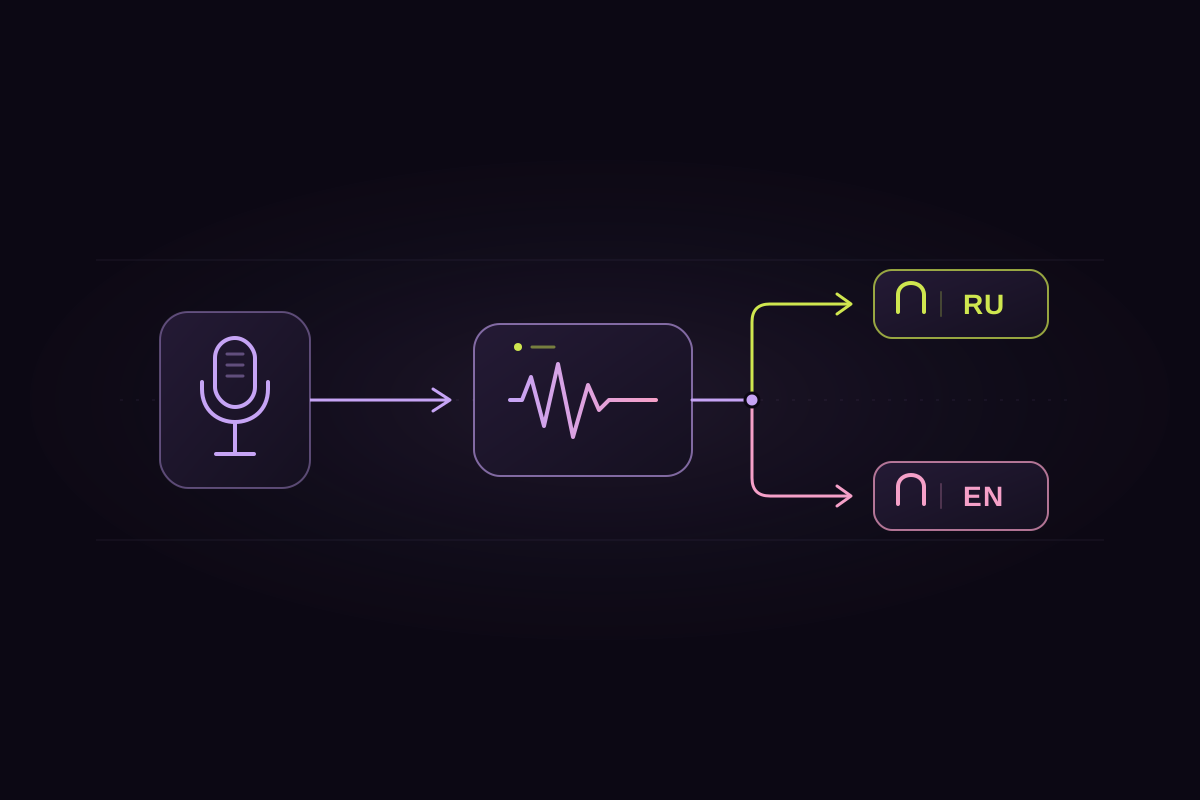
Simultaneous interpreting allows listeners to hear a speech in another language as it is delivered. It is worth considering for plenary sessions and other parts of the program where maintaining the overall pace matters. The interpreting team, their working space and the equipment are selected after reviewing the program, languages and venue.
With consecutive interpreting, the speaker pauses for the interpreter to convey what has been said. These pauses need to be built into the running order. This can work well for negotiations in a small group; for a busy plenary program, its effect on the schedule needs separate consideration.
A conference can combine formats: simultaneous interpreting in the main room and consecutive interpreting at individual meetings. Agree the choices with the interpreters and technical team, then reflect them in the program and estimate.
Map the program by room and time
A table with the time, room, format, languages, speakers and number of listeners helps with planning and estimating. It shows which tasks run simultaneously, where people need to move between rooms and when the setup needs to change. Delegate numbers alone do not answer these questions.
Here is a hypothetical example: in the morning, the whole group attends plenary talks with interpreting from Russian into English. After lunch, two parallel sessions begin, while meetings with Arabic-speaking partners take place in a separate meeting room. These are three simultaneous tasks. The solution for the morning session cannot automatically be treated as the solution for the whole day.
Prepare the speakers and materials
Interpreters need the program, presentation topics, slides and a list of names. If a full speech script is unavailable, provide key points and explain the context: which product is being discussed, what decisions the audience is expected to make and which abbreviations the company uses.
For a specialist conference, put together a working glossary. Agree ambiguous terms, job titles and product names with someone on the client's side who knows the subject. This is particularly useful when a familiar internal name differs from the official one.
Agree a deadline for supplying materials and a process for updates. If a speaker changes a presentation, the interpreters and technical team should receive the same current version. Include videos, interviews and prerecorded addresses in the list of materials for preparation.
Plan for questions from the audience
A presentation can be perfectly prepared, yet the discussion can stall at the first question. Delegates speak different languages, the speaker may not understand all of them and the moderator needs to manage the order of questions. Discuss how this part of the session will work in advance.
Clarify which languages delegates can use to ask questions, how the interpreters will hear them and how the speaker will receive the interpretation. The moderator should know the agreed process and explain it to the audience. Interpreters and remote participants may not hear a question asked without a microphone, so the host should ask delegates to wait for one.
If questions are collected in writing or through an app, decide who will select and translate them for the moderator. For a remote speaker, separately check how the question and answer will pass through the connection platform.
Check the entire audio chain
At rehearsal, run through the actual scenarios: speech from the stage, a question from the audience, audio from a presentation video and a remote participant joining. Testing a single microphone does not show what will happen in all these situations.
Together with the interpreters and technical team, check that interpreters can hear the original speech and listeners receive the right language. Then test switching between audio sources and the response to a failure. Agree in advance who decides whether to pause and who explains what is happening to the room.
If recording is required, define what it should include: original audio, interpretation or several tracks. This needs to be addressed during technical preparation. Once the event is over, it may be impossible to recover a missing track.
Arrange how listeners will receive the interpretation
If receivers are being used, plan their distribution and collection as part of the guest flow. Where does a delegate pick up a device? Who explains channel selection? Where should they go if it fails, and where should they return the set? Resolve these questions before registration opens.
Base device numbers and the agreed reserve on the audience for the relevant sessions. On site, assign responsibility for tracking devices, issuing them, helping listeners and collecting returns. If interpreting will be delivered through personal devices, check access, compatibility and the clarity of the instructions at the actual venue in advance.
Record responsibilities in one document
The client confirms the audience languages, program and terminology. Interpreters agree their working conditions and receive the materials. The technical team is responsible for the agreed audio setup. Coordinators help listeners access the interpretation. The precise division of duties may vary, but a named person should accept responsibility for each task.
Bring the agreements together in a working document: the program by room, languages, contacts, material deadlines, rehearsal arrangements and procedures for changes. Appoint a lead who gathers confirmation from everyone involved. A replacement speaker or a rescheduled session will then trigger a clear review of the implications for interpreting.
Planning a conference in Egypt with delegates from different countries? Send your provisional program, the languages of speakers and listeners, guest numbers and details of parallel sessions. La Royal Event can coordinate interpreting with the venue, technical production and the team working on site.
Liked this article?
Share with colleagues — useful for them, nice for us :)
Stay on top of the industry
Weekly — new articles on MICE industry, cases and insights. No spam.