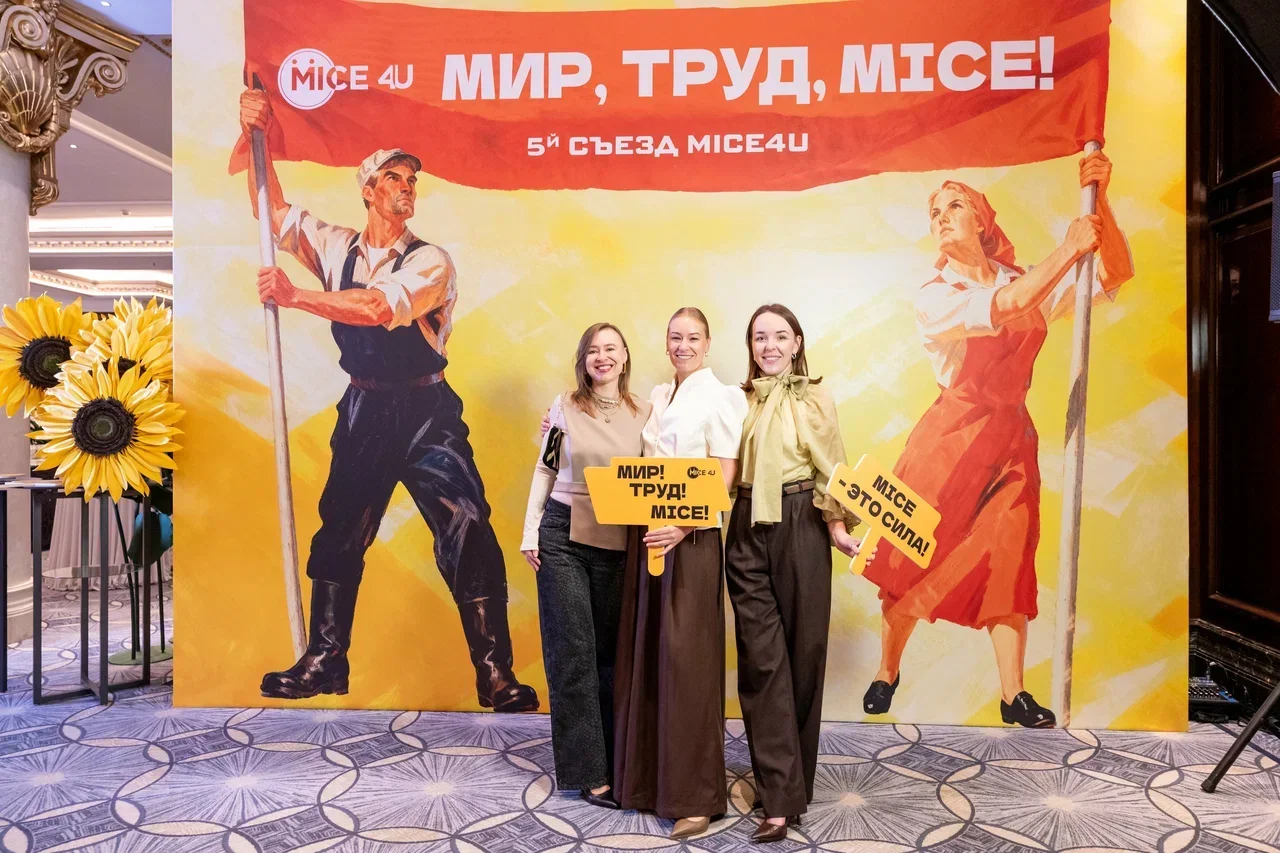
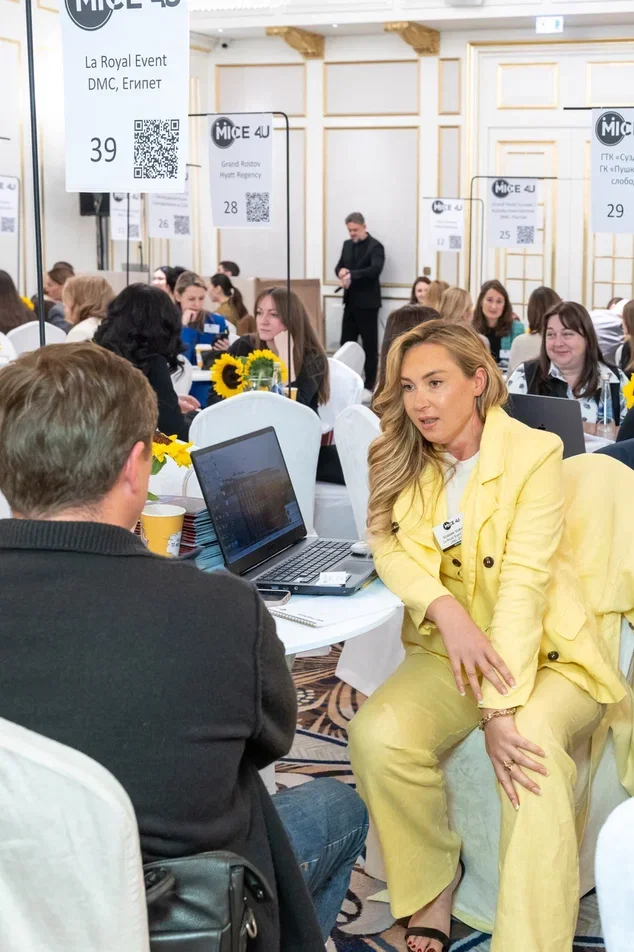
Egypt has stopped being the exotic slide in a deck and is back on real shortlists. On 9 September 2026 the company was represented at the MICE4U workshop in Moscow by Ksenia Usacheva, founder and CEO of La Royal Event: she spent the day at table 39 talking to corporate buyers and agencies about exactly that — what can realistically be built in Cairo and Sharm El Sheikh today, on what lead time, and with whom on the ground. Here is how the day went, which questions came up most often and what we answered.
What MICE4U is
MICE4U is a workshop built on speed meetings: a new person across the table every ten minutes, with none of the trade-show scrum and no queue at a booth. It is run by the IM Marketing agency at The Carlton, 3 Tverskaya Street. In 2026 it took place on 9 September, from ten in the morning until nine in the evening, and closed with an interactive evening programme in two streams.

The format is unforgiving, and that is its virtue. Ten minutes leave no room for talk of a bespoke approach: you have to name the destination, show what you actually do with your own hands, and hear what the person opposite is trying to solve. By the end of the day what shows is not who presents best, but who genuinely works on the ground.
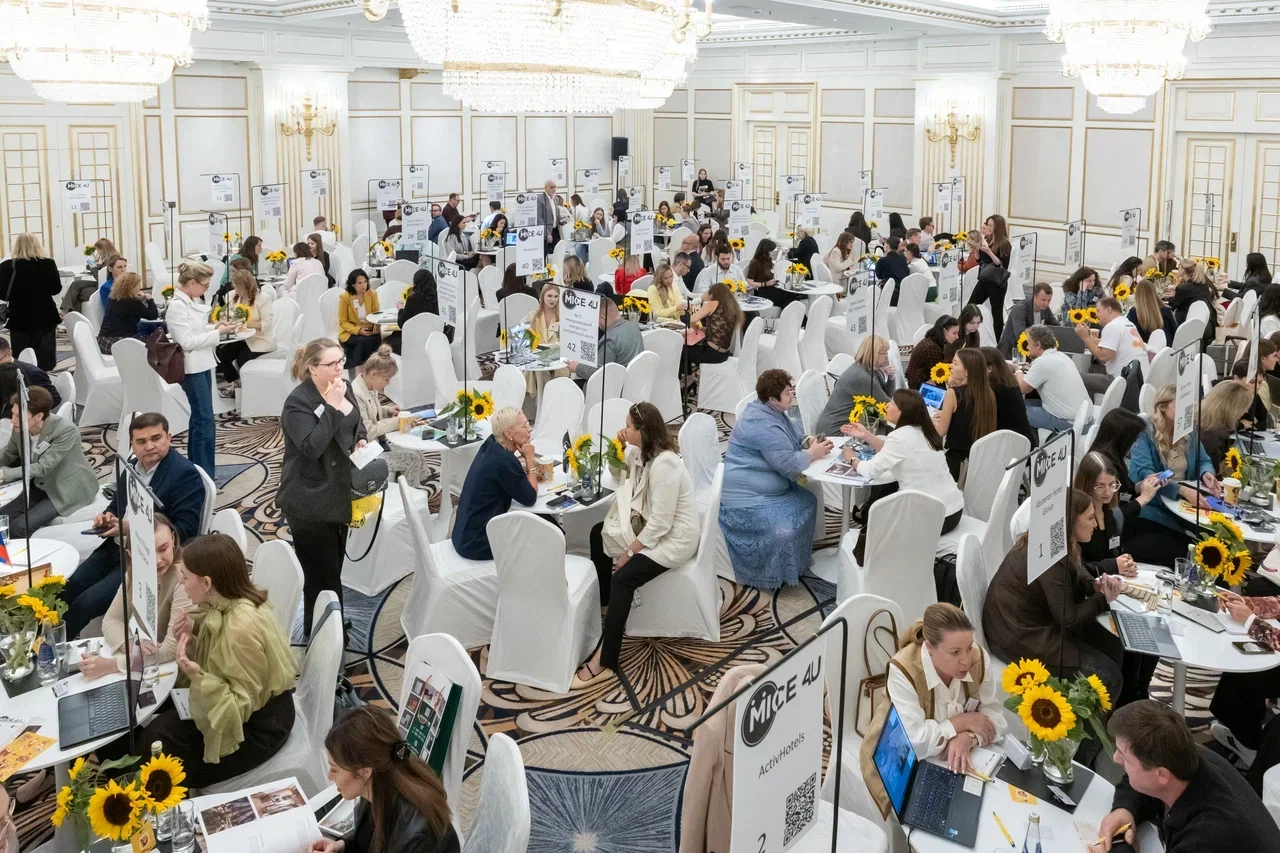
We presented Egypt — as a destination and as the receiving side
Egypt at MICE4U was presented by Ksenia Usacheva — founder and CEO of La Royal Event, a MICE and DMC agency with its team in Cairo and Sharm El Sheikh. We came to the workshop with Egypt: as a MICE destination for corporate groups, and with our own receiving company — a DMC that runs the project on the ground. That distinction matters. Selling a destination and handing the group to a contractor is one thing; meeting them at the airport yourself, securing the permits, rigging light and sound in the room and answering for every transfer is another. We work on direct contracts with ship owners and hotels, and our team sits in Cairo and Sharm El Sheikh rather than in an email thread through an intermediary.
«We do not sell a destination only to hand the group over to a contractor. We meet them at the airport ourselves, secure the permits ourselves and answer for every transfer ourselves — which is why we speak about Egypt as the receiving side, not as an intermediary.»
What we put on the table:
- Signature programmes for groups of 20 to 100 guests: quests on the Giza plateau, in the Grand Egyptian Museum, in historic Cairo and in Sinai
- Nile cruises: five-star ships with 37 and 53 cabins, a private charter for 20 guests, and the sailing dahabiyas of Nour El Nil on the Esna–Aswan route
- Venues that are not in any open catalogue: private evenings inside temples, dinners with the pyramids in view, moorings where large ships cannot go
- The full DMC cycle: permits and approvals, transport, Egyptologist guides, technical production, delegation handling and protocol
- Travel built around major events, including concerts on the Giza plateau
What corporate buyers asked
How hard is the logistics
This came up at almost every one of the several dozen meetings held at table 39 that day, and it is a fair question. The short answer: the flight is shorter than people assume, and everything after it is the receiving company's responsibility. The group does not arrange its own connections, hunt for coaches or work out who is meeting them at the aircraft door. For an organiser Egypt is in fact simpler than many European destinations, precisely because the whole ground operation sits with one contractor.
What about venues for the business programme
People asked about halls for 300 to 1,000 delegates, simultaneous interpretation and technical kit. We answered honestly: the halls exist, but technical production must not be left to the hotel's default contractor — that is the single most common source of failure at conferences abroad. We bring our own equipment and our own crew, and we inspect the room in person beforehand rather than trusting photographs on a hotel website.
Can you get private access to the monuments
You can, and it is one of the reasons Egypt makes a shortlist at all. Private access, evening programmes on archaeological sites and moorings closed to large vessels are a question of lead time and approvals rather than budget. That is why those elements go into the plan first, not as an afterthought.
How long does preparation take
A signature programme needs four to six weeks: site reconnaissance, prop making, the personal details tied to the company. Programmes that travel with their own set design need eight to ten weeks for a first staging. Cruises and private access are booked against specific dates, so the earlier the month is known, the wider the choice.
Who is accountable on site
The question asked by anyone who has already had a trip go wrong. Every project has a named person with a phone, in the same country, the same time zone and the same venue as the group. Not a call centre, and not "our partner in Cairo".
«Who is accountable on site is the one question a presentation cannot answer. That is why the client knows the name and phone number of the person who will be with the group in Egypt before the contract is signed.»

Why Egypt is back on shortlists
- A short flight, and a season running from September to May — covering autumn conferences and spring incentives alike
- Hotels run on full board: feeding the group is already inside the package rather than a separate budget line
- Venues with a history of their own: the Giza plateau, the Grand Egyptian Museum, the Nile, Sinai — a backdrop no set build can buy
- One contractor for the ground operation, so permits, transport, guides, technical production and programme do not fall apart between five companies
- The format scales: from a board of eight to a dealer conference of a thousand delegates
What happens next
What remains after a workshop is the useful part: specific briefs from specific companies — autumn conferences, spring incentives, anniversaries and offsite strategy sessions. If your brief is on that list, write to us: we will cost it and show you how it looks on site rather than on a slide.
Liked this article?
Share with colleagues — useful for them, nice for us :)
Stay on top of the industry
Weekly — new articles on MICE industry, cases and insights. No spam.